Your Signature Framework
Module 1, “What's a 'Signature Framework'? Examples + Overview of the Process”, free to watch for 72 hours.
Watch the replayGet the replay by email
About 38 minutes, in 7 short segments. You’ll have 72 hours from the moment you first open it. If you buy the course, this module comes with it, along with all the others, and you keep them for life.
Already signed up? Open the link in your welcome email.
Inside this module
- ✓Warm welcome to the Frameworks course 🤗
- ✓How early in your business should you create a framework?
- ✓Synonyms for "Signature Framework".
- ✓Examples of Popular Frameworks & What We Can Learn From Them...
- ✓Metaphors for Frameworks.
- ✓Why frameworks / what are they used for?
- ✓Overall Process of Framework Creation.
What people said
“I truly appreciate how George broke down the process in a clear and accessible way—what once felt advanced and overwhelming now feels practical and achievable.”
“WhatEVER he's teaching, he's down-to-earth, open, kind and CLEAR. … It literally helped me frame MY next steps in creating a way to organize All the Things I offer into one coherent form.”
“This webinar helped me to discover that I already have three frameworks that I've been using for years with clients successfully. I have two more that I will be using.”
“Today I was actually able to use one of the frameworks I came up with in a consultation call I had. I found it to be very useful in helping me communicate to the client the process I would use in working with them.”
Your replay
Your replay is open until … (your time).
Two ways through this module
Use either one, or both. Each remembers your place.
Click on any of the options above.
0:00 of 37:33
Pick up where you left off: …
Module 1’s Lessons:
- Warm welcome to the Frameworks course 🤗4 min
- How early in your business should you create a framework?2 min
- Synonyms for "Signature Framework"2 min
- Examples of Popular Frameworks & What We Can Learn From Them...11 min
- Metaphors for Frameworks2 min
- Why frameworks / what are they used for?7 min
- Overall Process of Framework Creation9 min
Warm welcome to the Frameworks course 🤗
Video · 4 min
Key points from the video
- Frames the course as a learning community, not a lecture: George does not claim to hold all the answers, and sees his strength as facilitating a space where everyone learns from each other.
- Invites students to take what resonates and leave the rest.
- Names the room: ~23 live on the call for the free Module 1 webinar; the paid course (Modules 2–6) was a smaller group.
- Deliberately withholds a single definition of "signature framework" — states his intent up front: he'll help each person discover their own answer through examples, metaphors, and definitions, rather than hand down one. He believes a truth has the most power when the person finds it and puts it into words themselves.
- Starting exercise: before he shapes the definition further, decide your own gut answer to what a signature framework is, and refine it as you go; he asks again at the end of the module.
The full lesson text (click to show)
Warm welcome!
Overall, I view my courses as a learning community -- students learn from each other, as well as from whatever I share that is relevant to you.
I invite your questions and your replies to each other's questions. Be helpful, be kind, be engaged in the chat only as much as you'd enjoy.
Let's dive right in -- "What is a signature framework" is the title of this module...
Here's the unconventional way we'll get to that understanding:
Instead of me telling you the definition (for you to memorize or something!) I'd like to invite you to create the definition for yourself, from what I'm going to share with you, which are examples and metaphors in the coming lessons.
Truth is most powerful when it's personally created and articulated.
In other words, you're going to create a framework for what is a signature framework ;)
Shall we give it a try?
At this point, before we get into seeing examples, what do you think a "signature framework" is?
George's answers to students' questions (click to show)
A student shared: "When I think framework, I think of structure and organized containers. My guess is that a signature framework is the way you present and communicate information in a way that is unique to how you see and do things. It’s important because we are all different as humans but also have a lot in common. Sometimes, the particular way you see something can be really helpful to someone if they resonate …"
George replied: I applaud your willingness to experiment! Looking forward to how your framework evovles.
How early in your business should you create a framework?
Video · 2 min
Key points from the video
- Direct answer: build one from the very beginning, not after you feel "ready."
- Rationale: clients come to you already feeling ungrounded or uncertain and want clarity — so even a brand-new practitioner should state with confidence how they work with clients, rather than hedging with a tentative idea.
- A framework is expected to be modified after the first and even second client — that's normal, not a sign it was wrong.
- Value is double: excellent for marketing, and personally grounding for the practitioner, who can think of it as what they believe for now (a note to yourself, not something to tell clients).
Synonyms for "Signature Framework"
Video · 2 min
Roadmap Model Blueprint Methodology Meta-Process Transformational Strategy Proprietary System Operating System
What else? :)
And based on these words, how would you describe what is a Signature Framework?
Describing in your own words -- and integrating others' responses -- is a great way to learn :)
Key points from the video
- Offers a deliberately loose set of synonyms so people can find the word that resonates, rather than adopting his: road map, model, blueprint and methodology, as well as metaprocess, transformational strategy, proprietary system and operating system.
- Key distinction: a framework is usually not a single exercise or tool — it's a collection, a scaffolding (the literal meaning of "framework") that things get hung on and organized.
George's answers to students' questions (click to show)
A student shared: "It’s helpful to have synonyms and I like the image of scaffolding where you can hang and place things, because that’s very close to what I see in my mind. I also resonated with the words “system” and “strategy”, especially the latter because when you create a framework you are likely proposing a way of approaching something that works well, based on your experience or research."
George replied: well said! Yes it becomes a strategy/approach 🙏🏼
Examples of Popular Frameworks & What We Can Learn From Them...
Video · 11 min
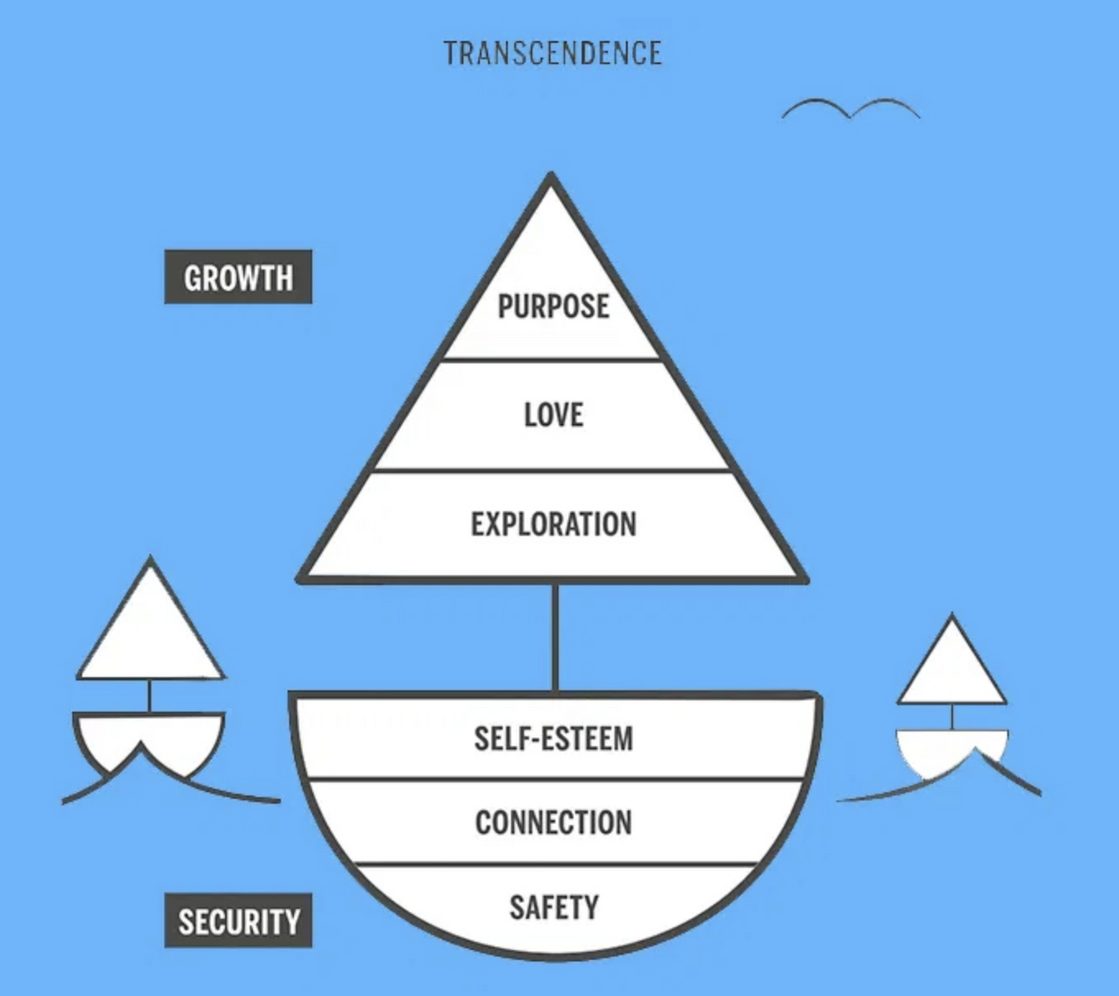
(Sailboat metaphor by Scott Barry Kaufman)
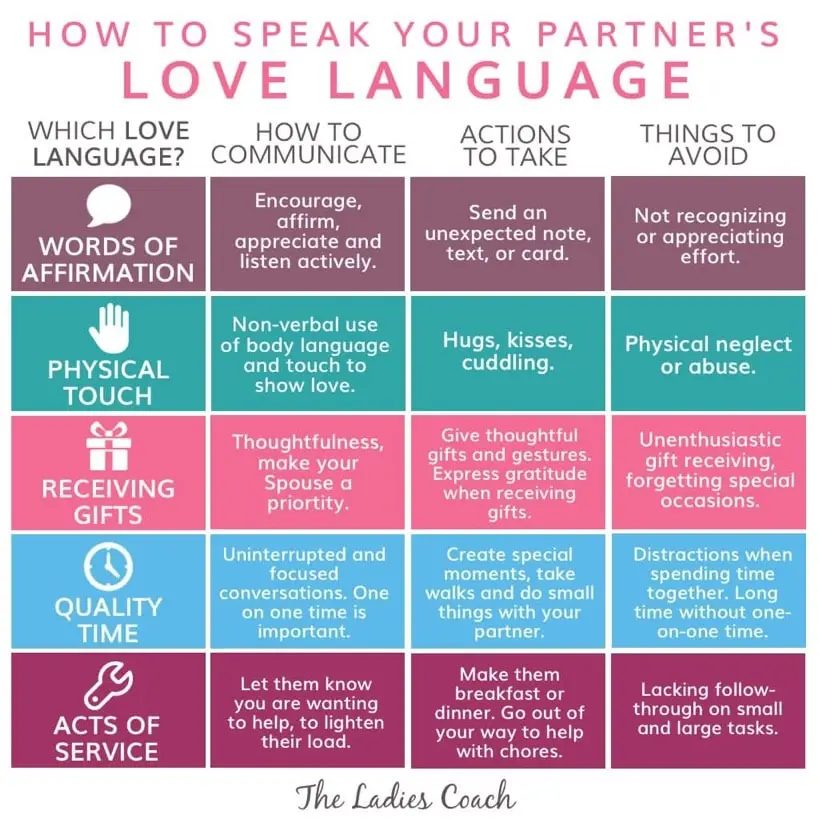
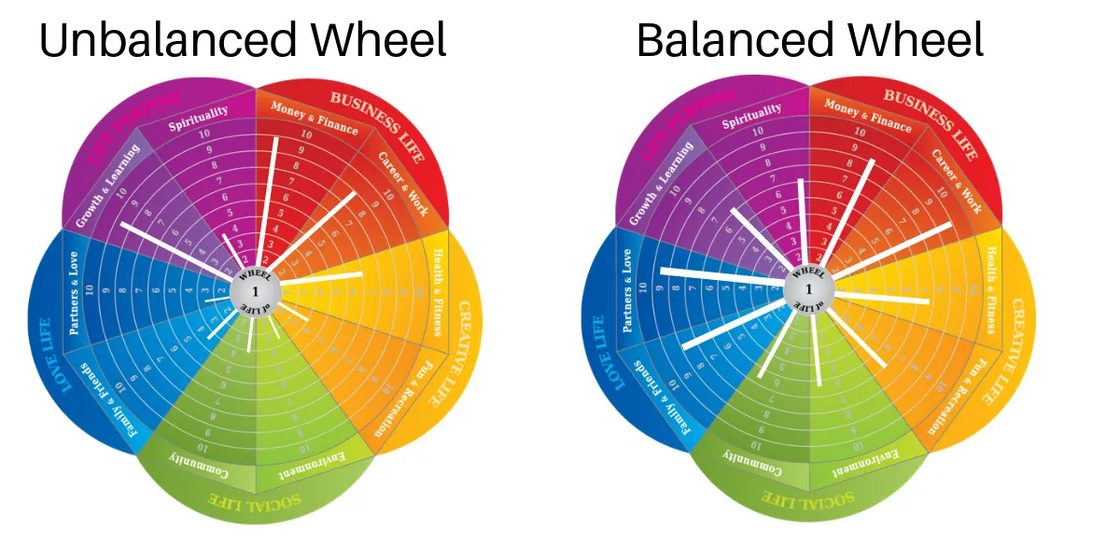
(The Wheel of Life examples from this article)
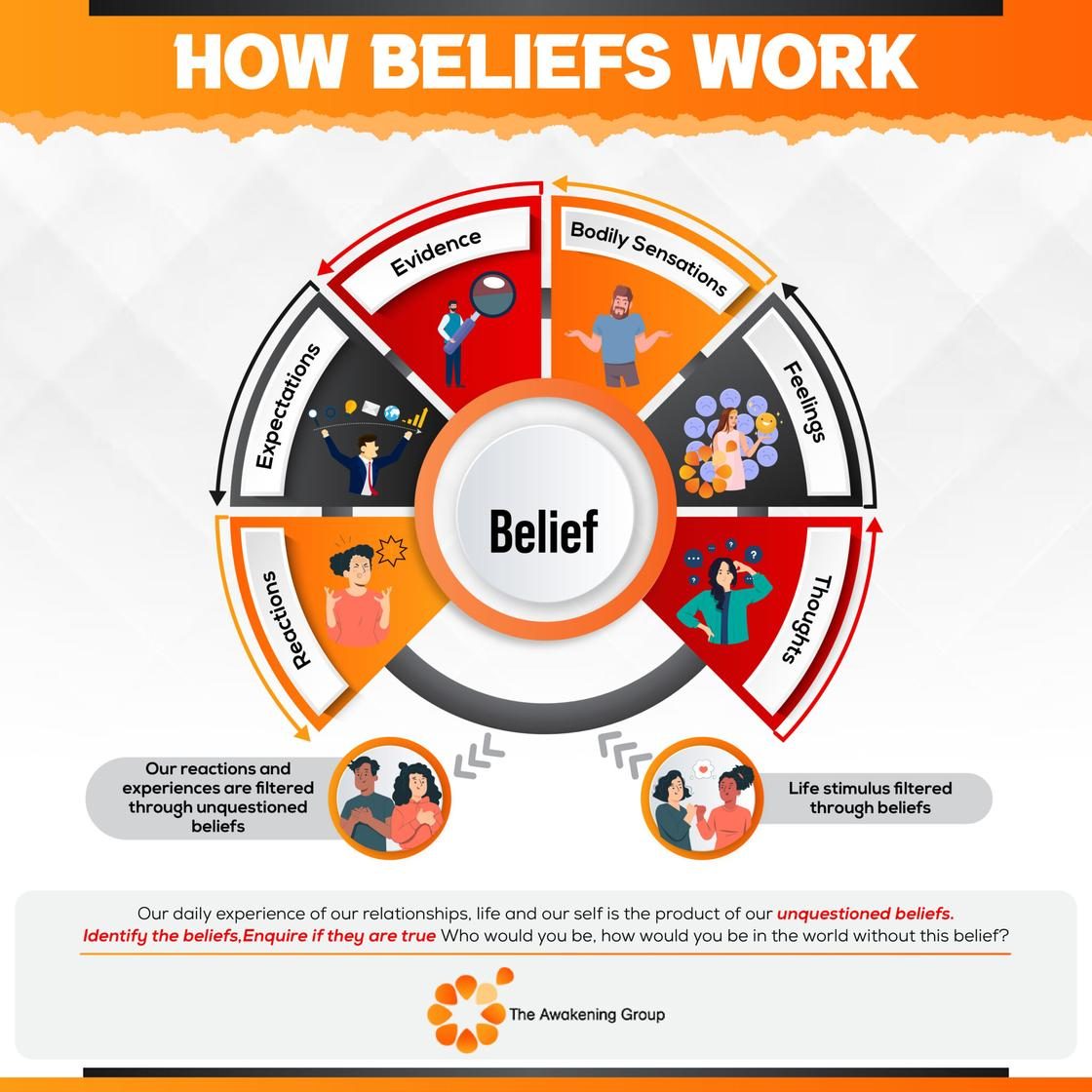
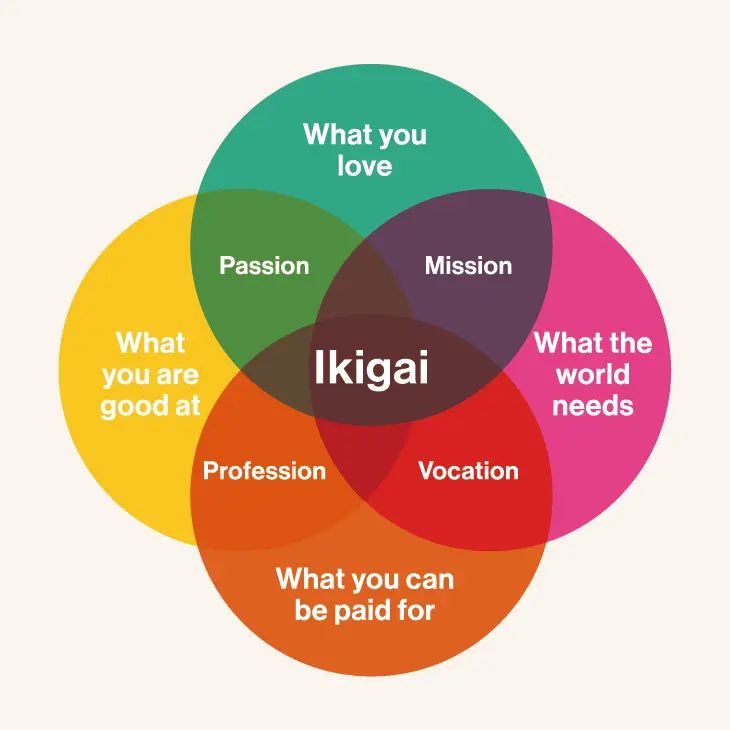
And this one's not as popular yet ;)
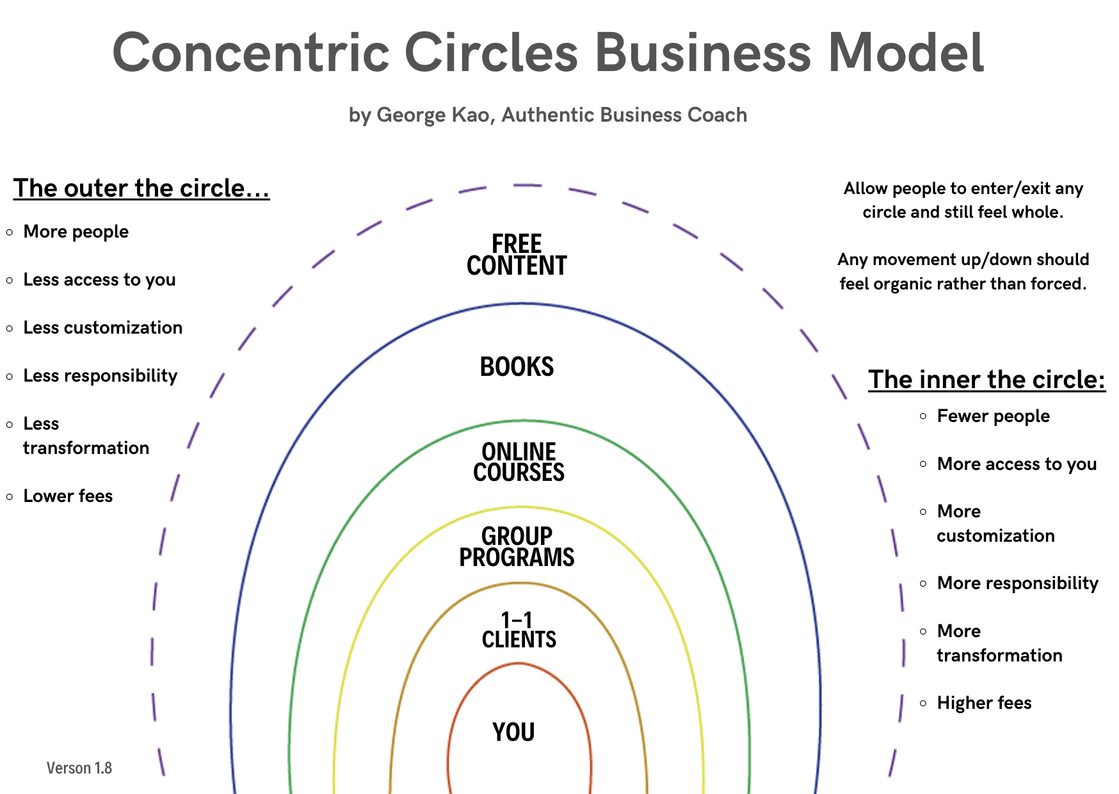
- Which framework(s) do you already use in your work, if any?
In your life?
Relationships?
Spiritual growth?
Health?
etc.?
- Pick one framework you love -- why is it well contructed? Something about its structure, shape, story? What can you learn from it?
Share in the Student Discussion doc if you'd like.
And try to reply to a few others' comments to say what you appreciate about their insights 🙏🏼😊
Key points from the video
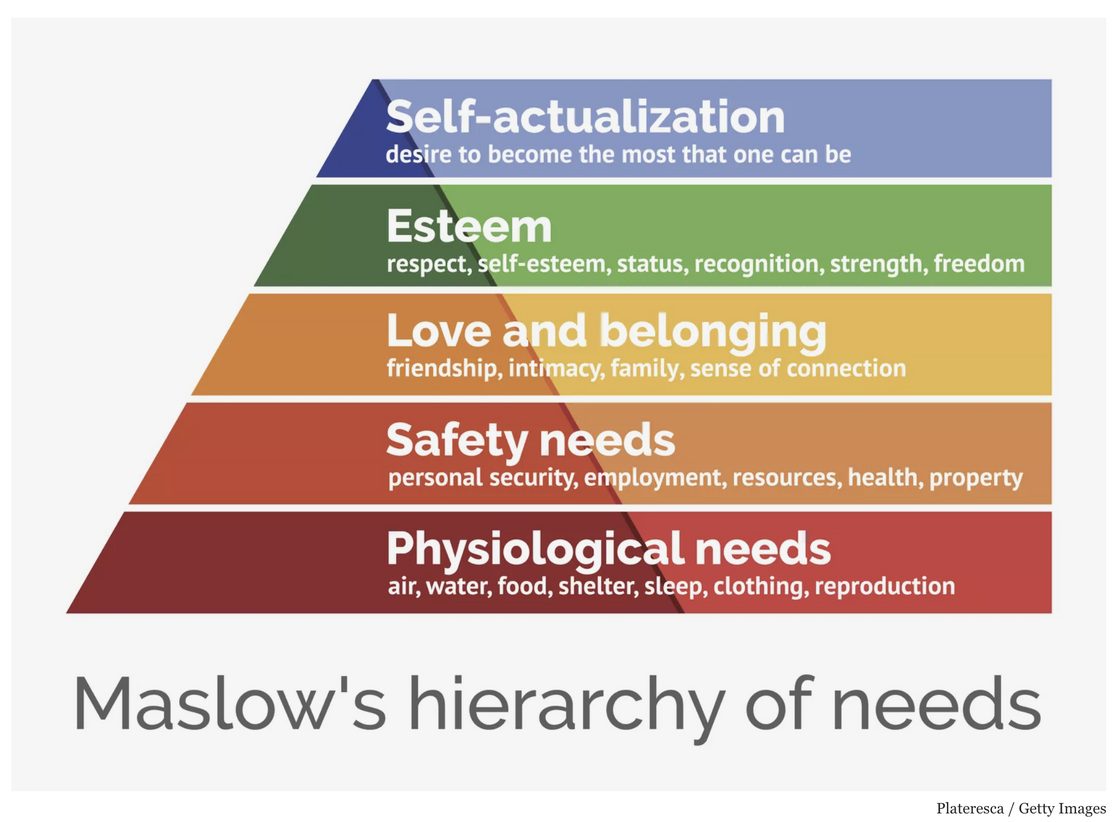
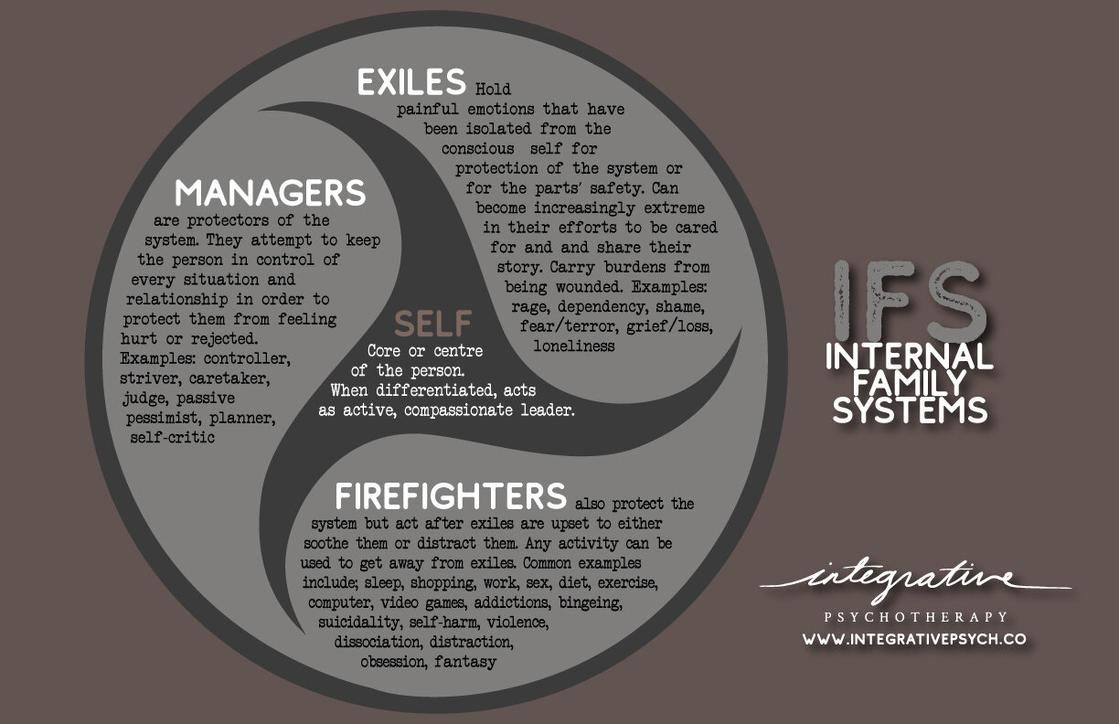
- Runs through well-known frameworks specifically for their shape and what the shape communicates, to spark students' own visual thinking:
- Maslow's Hierarchy — pyramid; segment size loosely represents the % of humanity operating at that level.
- Scott Barry Kaufman's "sailboat" reinterpretation of Maslow — proof a framework needn't be a pyramid; it can be a literal object with labeled parts.
- Internal Family Systems (IFS) diagram — communicates "wholeness with parts" (his wife is an IFS therapist).
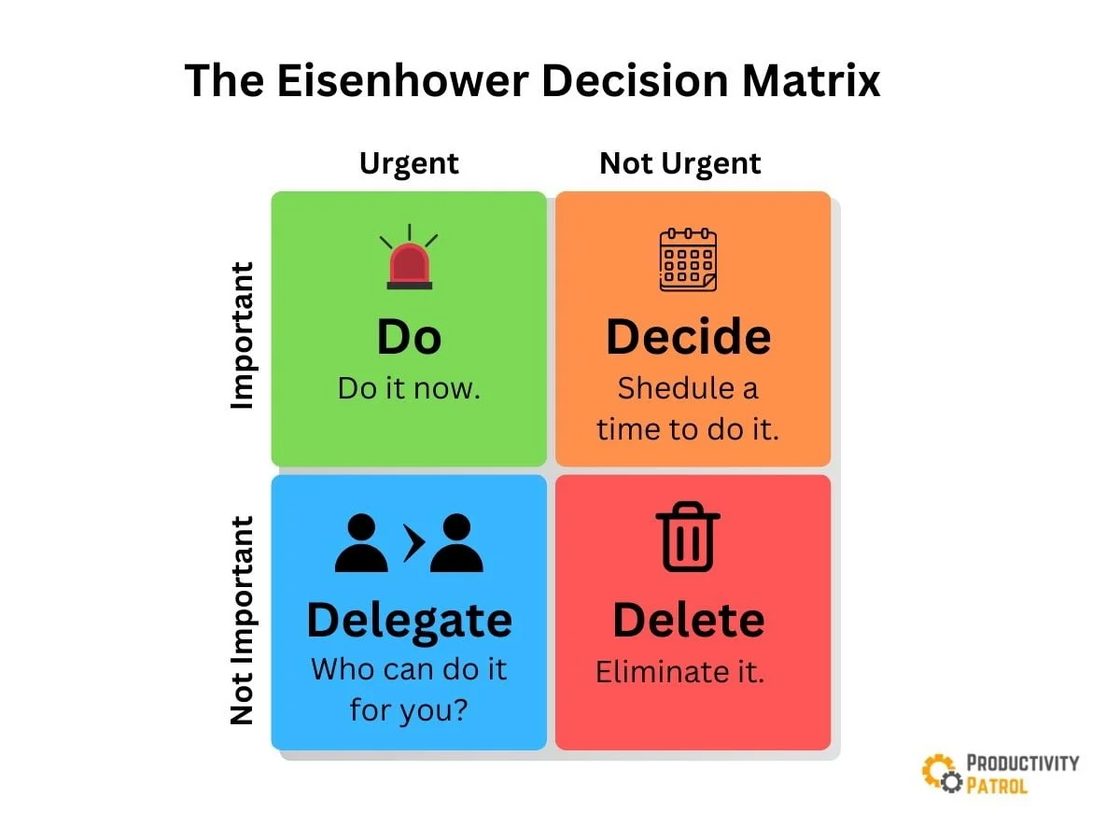
- Eisenhower Decision Matrix — he thinks Stephen Covey's 7 Habits is what made it famous; two axes (urgent↔not, important↔not) creating four quadrants for prioritizing.
- Love Languages — not a matrix but a colorful table of information.
- The Wheel of Life — a scored pie across life domains (business, creative life, social, love, purpose, etc.) to visualize balance/imbalance.
- Byron Katie / "The Work"-adjacent diagram — an example of a cycle shape, each segment worth studying individually.
- Ikigai — a 4-circle Venn diagram (unusual — most Venn diagrams use 2); he found it on the Japanese government's own website, evidence of its global reach; notes intersections of 3 circles can also carry distinct meaning.
- His own Concentric Circles Business Model — he jokes that almost no one knows it because he made it up himself, then explains it represents energetic flow: you're the center emitting energy/ideas/time; each ring has its own boundaries, and ring size represents how many people benefit from that level of energy. Used for years to structure his own offers; full write-up exists as a separate blog post/video.
- Prompts students to name frameworks they already use (life, relationships, spiritual practice, health) before revealing his examples.
George's answers to students' questions (click to show)
A student shared: "I'm thinking if you don't have a diagram, you might choose an acronym? Would your acronyms: CCC or CARE or EASE be considered a framework?"
George replied: indeed! Those are all separate frameworks: CCC, CARE, EASE. And you're right on -- since I'm not a very visual person, I just went with acronyms and not diagrams yet :)
A student shared: "George, I don't know if you'll see this but in therapy I love having a diverse set of clients who bring different issues and I apply IFS and intuitive drawing to all of them and see them heal and improve. Should I still be trying to niche for marketing purposes?"
George replied: great question. I like to say "you don't have to niche yourself, but it helps a lot to niche your offers" -- so I would encourage you to consider therapy packages that apply your IFS to different specific situations/issues/problems/goals that your clients tend to come to you with.
Metaphors for Frameworks
Video · 2 min
Key points from the video
- A running catalog (posted/updated below the video, open to class additions) of 30 possible visual-metaphor shapes a framework can take, each with an example application: Linear (step-by-step journey — a personal growth arc from heartbreak to healing), Pyramid/Hierarchy (tiers narrowing to a peak — Maslow's Hierarchy), Circle/Loop/Cycle (recurring process with no fixed start/end — Plan-Do-Check-Act), Wheel/Spokes (central hub with segments — a life-coaching wheel), Axis/Cross (intersecting lines forming quadrants — mindset-vs-spirituality mapping), Grid/Matrix (comparing factors — Eisenhower Matrix), Tree/Branching (trunk and branches — decision trees for choosing modalities), Venn Diagram (overlapping shared/separate elements — Ikigai), Spiral (iterative loops expanding each pass — Spiral Dynamics), Funnel (wide input narrowing to output — a sales funnel), Flywheel (momentum-building cycle — an ongoing client-transformation cycle), S-Curve (slow start, rapid acceleration, plateau — a meditation-practice deepening arc), Mind Map/Radial (central concept with branches — brainstorming new offerings), Diamond (divergence then convergence — Double Diamond design thinking), Concentric Circles (rings expanding from a core — his own Concentric Circles Business Model), Fishbone/Ishikawa (a spine with root-cause branches — diagnosing blocks in a practice), Wave/Pulse (rising/falling energy — emotional cycles in a therapy journey), Chain/Links (interdependent steps — stages of a group retreat), Puzzle Pieces (parts forming a whole picture — combining multiple modalities), Target (concentric rings aimed at a goal — a KPI bullseye), Bridge/Gap (spanning current state to desired state — self-doubt to confidence), Map (charting a route — a customer-journey map), Iceberg (visible vs. hidden levels — conscious vs. unconscious beliefs), Compass (facets pointing to a "true north" — values-guided decisions), Mountain/Peak (ascent to a summit — overcoming obstacles to self-realization), Nested Circles/Russian Doll (layers within layers — body → heart → soul), Cloud (unstructured brainstorm space), Fractal/Repeating Pattern (self-similar forms at multiple scales — generational healing cycles), Island Journey (Island A to Island B via a "boat" — leading clients from confusion to clarity), Mandala (circular form representing wholeness — integrating mental/emotional/physical/spiritual selves).
- Uses the spiral shape to introduce his own signature teaching philosophy, Spiral Learning: with lifetime course access, a student who revisits the material later notices nuances missed the first time, so understanding and implementation keep spiraling upward.
- The list is not final: he expects to keep modifying it over time, partly from student feedback.
The full lesson text (click to show)
In an upcoming module of the course we'll work on actually selecting a visual metaphor for your framework.
Until then, here are some ideas to get your creativity going...
Metaphors for Signature Framework...
- Linear – straightforward chronological or step-by-step sequence (project timelines, a personal growth journey from heartbreak to healing)
- Pyramid/Hierarchy – tiers of importance or progression, widest base to narrow peak (Maslow’s Hierarchy of Needs, a layered approach to self-care from physical foundation to spiritual elevation)
- Circle/Loop/Cycle – recurring, ongoing processes with no fixed “start” or “end” (Plan–Do–Check–Act cycle, cyclical phases of emotional healing)
- Wheel/Spokes – a central hub with segments around it (life-coaching wheel, a chakra alignment wheel for holistic well-being)
- Axis/Cross – two or more intersecting lines forming quadrants or directions (mapping mindset vs. spirituality in coaching, a brand-perception axis for wellness offerings)
- Grid/Matrix – comparing multiple factors across rows and columns (Eisenhower Matrix for time management, a clarity matrix for aligning passions and priorities)
- Tree/Branching – trunk and branches representing expansions or pathways (decision trees for choosing modalities, a family tree of spiritual lineage)
- Venn Diagram – overlapping circles showing shared and separate elements (Ikigai for life purpose, synergy between physical, emotional, and spiritual wellness)
- Spiral – iterative or evolving loops that expand with each pass (Spiral Dynamics, step-by-step self-improvement that deepens over time)
- Funnel – wide input narrowing to a focused output (sales funnel for signing coaching clients, filtering life’s possibilities into one’s true calling)
- Flywheel – continuous cycle building momentum each rotation (ongoing transformation cycles for clients, a self-reinforcing practice of personal growth)
- S-Curve – slow initial growth, rapid acceleration, then a plateau or shift (technology adoption life cycle, stages of deepening meditation practice)
- Mind Map (Radial) – a central concept with outward branches for brainstorming (vision board mapping, brainstorming new offerings or healing modalities)
- Diamond – stages of divergence and convergence (Double Diamond in design thinking, exploring many holistic solutions then narrowing to the most fitting)
- Concentric Circles – rings expanding from a central core (layers of personal boundaries, circles of influence for a coaching business)
- Fishbone (Ishikawa) Diagram – a “spine” with branches identifying root causes (pinpointing sources of stress or trauma, diagnosing blocks in a holistic practice)
- Wave/Pulse – rising and falling energy or phases (emotional cycles in a therapy journey, flow and ebb of creative inspiration)
- Chain/Links – interconnected steps or elements that depend on each other (stages of a group healing retreat, a chain of supportive habits for overall well-being)
- Puzzle Pieces – various parts forming a complete picture (combining multiple modalities—coaching, energy work, nutrition—for a holistic solution)
- Target – concentric rings aimed at a specific goal (clear objectives in a mindfulness program, KPI bullseye for client transformation)
- Bridge/Gap – spanning from current state to desired state (transitioning from self-doubt to confidence, bridging theoretical self-improvement to practical habits)
- Map – charting a territory or route with possible paths (customer journey map, personal progression from confusion to clarity)
- Iceberg – visible vs. hidden levels beneath the surface (conscious vs. unconscious beliefs, shadow work uncovering deeper issues)
- Compass – multiple directions or facets pointing to a “true north” (values-guided decision-making, spiritual alignment guiding life choices)
- Mountain/Peak – ascent toward a lofty goal or summit (climbing challenges in a wellness journey, overcoming obstacles to reach self-realization)
- Nested Circles/Russian Doll – layers within layers, each enveloped by the next (from body to heart to soul, or from individual to community to collective consciousness)
- Cloud – unstructured, intangible space for brainstorming (capturing elusive ideas for a new healing modality, mental “cloud” of inspiration)
- Fractal/Repeating Pattern – self-similar forms repeating at multiple scales (interpreting recurring life patterns, generational cycles in healing work)
- Island (Journey) – traveling from Island A (current) to Island B (desired) with the “boat” as a vehicle (leading clients from confusion to clarity, the service or framework as the facilitator of change)
- Mandala – a circular or symmetrical form representing wholeness and unity (visualizing holistic well-being, integrating all aspects of self—mental, emotional, physical, spiritual—into a harmonious design)
Do any of these immediately resonate with you?
Could you envision any of these being the shape of your signature framework?
We'll do some actual work on this in an upcoming module. For now, just some ideas to get you dreaming about your framework :)
Why frameworks / what are they used for?
Video · 7 min
Key points from the video
- Poses the "so what" question to the class before giving his own list of benefits. His reasons, in order:
- Makes your work unique — your combination of challenges, traumas overcome, books read, people met, and peak experiences is a mandala of uniqueness. Even certified practitioners rarely agree 100% with their teachers — he invites students to rebel against his teachings authentically, adapting what they hear to their own experience, not just for the sake of rebelling.
- Becomes a natural filter once shared publicly — draws in resonant ideal clients and repels non-fits, letting you go much deeper sooner with the right people.
- Business flexibility — you're not locked into someone else's rigid modality. Named example: he's heard Byron Katie's organization is very strict about how "The Work" can be modified and still bear that name — vs. taking what you've learned, melding it with your own experience, and naming it yourself (while still crediting your lineage).
- Organizes content creation — the framework becomes a scaffolding where all your content has a place; he personally audits his own framework for which part he hasn't created content on recently.
- Source of new offers — look at your framework and ask which part you haven't yet built a coaching program, healing service or webinar around. He runs through his own framework roughly every year (or four-year cycle) to spot gaps.
- Simplifies sequencing of courses/content — once the framework exists, deciding what to teach first becomes much easier.
- Smooths client onboarding — share the framework up front (often already on your sales page) so prospects have usually seen it and understand your approach before they sign up.
- Also becomes a filter for your own research and curiosity: if something doesn't fit anywhere in your framework, it may not be a good use of your time right now.
- His conclusion: a framework is powerful enough that he thinks every solopreneur needs to create one.
The full lesson text (click to show)
Now that you've seen some examples of frameworks... why might it be important for you to create one?
How does it benefit you and your clients?
Share in the Student Discussion doc 🙏🏼
Some benefits of having a signature framework...
You'd have a unique way of thinking & working with clients...
When you share your framework, it is a natural filter for way-of-thinking -- those who are likely to be your ideal clients will resonate strongly with it.
You’ll have more business flexibility by not relying on someone else’s framework...
You’ll have a framework to organize all your content! (Later in the course I'll offer you a template for this.)
You'll have a roadmap for your offers! (We'll also work on this later in the course.)
Where you can apply your framework:
When choosing what topics to write about
When figuring out the sequence/schedule of your courses / programs
When creating your course/program
To work with clients (e.g. having a clear client roadmap)
When writing your book(s)
Whenever you’re researching or reading, now you have a place to put all important ideas
George's answers to students' questions (click to show)
A student shared: "I'm still not sure whether by framework, you are referring to a client journey: the steps you take a client through, which is more like a process or method. As other marketing teachers have called it "Getting your client from island A to island B". Or by framework do you mean the theoretical/fundamental underpinnings of a method/ (eg Ikigai)? I have a methodology and framework I have used …"
George replied: thanks for your patience!
Indeed there are big (or meta) vs small (or specific) frameworks. In the course, students choose which one to work on first. Some are starting with their Meta, and others are focused on the framework for a specific coaching program for example that they are running.
As for your case, I wonder if you have morphed that trademarked system over the years, so much that it might start to take on a life of its own -- your own framework perhaps?
Or, maybe you would benefit from creating a more meta framework, within which this trademarked methodology would be a part?
Also check out this publicly-available segment -- the lesson "Should you work on a BIG framework or a specific one, in this course?" in Your Signature Framework
A student shared: "I've actually done the Energy Signature exercise and a "few" of my ideal clients commented on my "WAKE UP" framework as politically a big no no word right now and they are less likely to align or buy in / share it with others. I'm leaning on letting it go and now I'm playing with NEW words like L.E.A.D or E.D.G.E which would allow me to use all the same modules and call them a variation of the …"
George replied: I love that you got feedback from your clients! And that you don't mind ignoring family/friend opinions, since they are often not our ideal clients :)
Overall Process of Framework Creation
Video · 9 min
Key points from the video
- Presents a literal mind map of an 8-step process that maps loosely (not 1:1) onto the course's 6 modules — some modules cover more than one step. He flags he may revise this map by course-end based on student examples/feedback.
- The 8 steps:
- Gather ideas — start anywhere, even a single client session (frameworks are often "fractal/holographic": they can describe your whole practice or one session). If overwhelmed, shrink scope: look at just your last client session or last piece of content and ask what ideas are embedded in it.
- Infuse your Energy Signature — add your unique stories, philosophies, values, and style. Explicit AI framing: AI can produce ideas endlessly (even through good-looking video avatars), so what sets you apart is the lived human experience that an AI cannot have. Directly tied to his separate Energy Signature course/blog content.
- Find the pattern / articulate the journey — step back from the raw idea-pile (which is already doing subconscious work) and ask yourself which journey you love taking your clients on — both tangible and intangible elements count.
- Structure — categorize, group, sequence, and size the ideas (bigger/more-important vs. smaller ideas) — this groundwork must happen before a visual can be created.
- Create a visual concept — sketch it yourself first; optionally hire a human graphic designer later to professionalize it. It doesn't have to cost much (he says $50 can go a long way); he did this with his Concentric Circles, paying someone to polish his own rough sketch. AI tools can help brainstorm visuals, but to professionalize the final visual you probably need a human designer.
- Name it, and return to the narrative — once visual + structure exist, upgrade your story about what the framework is, and tell it.
- Test and refine — happens continuously throughout the whole course and beyond, via peer feedback and client Q&A calls.
- Keep weaving in new ideas over time — a practice for revisiting and upgrading the framework indefinitely (the spiral-learning principle applied to your own work).
The full lesson text (click to show)
Gather & Filter Your Ideas
- Inventory existing knowledge, experiences, and tools - Notice what lights you up most - Identify which elements are essential vs. optional
Infuse Your Energy Signature
- Incorporate your unique stories, philosophies, values, style -- your energy signature - Highlight what makes your approach distinctive
Articulate Your Magic
- Articulate the journey or experience you create - Describe how your modality/process serves others - Acknowledge both tangible and intangible elements
Structure with Soul
- Decide on a layout that feels authentic (linear, cyclical, pillars, etc.) - Organize content in a way that flows naturally
Create Visual Concepts
- Sketch initial concepts that capture the essence - Consider simple ways to represent your work visually - Note where professional design support might enhance
Name & Narrate
- Brainstorm names that capture your essence - Craft language that resonates with your audience
Test & Refine
- Gather feedback through peer review (we'll be doing this throughout the course, not only in a later stage.) - Notice what lands well with clients - Stay open to organic evolution
Integrate & Evolve
- Weave framework into your existing work - Allow it to grow and shift with your practice
Are you looking forward to the process? :)
After you watch
If you’d like more after watching: The Your Signature Framework course. If you buy the course, this module comes with it, along with all the others, and you keep them for life.
This replay has closed
Thank you for signing up to watch.
If you’d like to keep going, the complete Your Signature Framework course is available for enrollment: The Your Signature Framework course. If you buy the course, this module comes with it, along with all the others, and you keep them for life.